Vinyl, Chain Link, Aluminum, Steel or Cedar: Choosing a Fence That Fits the Job
The best fence material depends less on taste than on what the fence has to do every day.
October 14, 2026 · 3 min read
Start with what the fence is for
People often start a fence project by picking a color. It's a better idea to start with the job. A fence around a pool has different needs than a fence that screens a neighbor's driveway, and a fence at a school has different needs than either. Once the job is clear, the material usually follows.
TJM Yard Enhancing installs vinyl, chain link, aluminum, steel and a cedar wood line, so here's how each of those tends to fit.
Vinyl for privacy and curb appeal
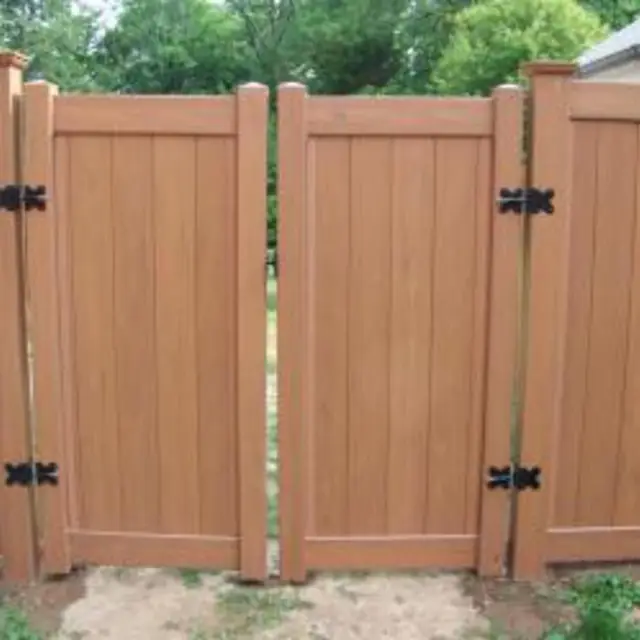
Vinyl is the usual pick when privacy and low upkeep both matter. TJM's vinyl is 100% pure virgin co-extruded vinyl, and the line comes in 32 colors, including five wood grain finishes and three standard colors. The wood grain gates in the photo with this article are a good example of the look. Archtop vinyl panels are available in all of the colors, and there are many styles with gates.
If you can't settle on a single color, TJM will mix and match them for you. A two-tone fence, say a solid body with a contrasting cap or gate, can tie in with the siding or trim on the house.
On upkeep, vinyl doesn't need the painting or staining a wood fence does. A hose and a soft brush handle most of what it collects. That's a large part of why homeowners who want privacy without a recurring project tend to land here.
Chain link for size and speed
Chain link is often passed over, but it earns its place. It's open, so you can see through it, and it covers large areas without becoming a wall. TJM installs chain link starting at 3 ft and going all the way up to baseball backstops over 20 ft. It comes in a variety of colors, including the standard green, with galvanized posts.
That range is what makes it useful, and it's something no other material on this list covers. A short chain link run keeps a dog in a side yard. A tall one stops foul balls from reaching the street. Because it's so adaptable, chain link is also a common choice for athletic fields, play areas and work yards, where the job is to contain activity, not to hide it.
Aluminum around pools
Aluminum is commonly used around pools, and TJM offers it in black or bronze, two colors that stay quiet beside a pool deck and landscaping. It's an open, ornamental fence, so it keeps the view clear and lets you see into the pool area from the house. It doesn't rust the way iron can, and its slim look sits well with a paver deck.
If you're fencing a pool, ask your installer to walk you through what the local requirements for pool barriers are, since those rules differ from town to town and so it's worth asking rather than assuming.
Steel for heavy use, cedar for a natural look
Steel is commonly used in high-traffic areas such as schools and commercial properties. It takes a beating well, which is exactly what you want when the fence sees kids, deliveries and daily wear. For most homes it's more than needed, but for a business property or a shared site, it's the right class of fence.
TJM also carries a cedar wood line for homeowners who want real wood. Cedar has a warm, traditional look that vinyl doesn't copy exactly, though like any wood fence it will weather with the seasons. Whether that's a feature or a chore depends on you.
Before you order anything, walk your property lines and check with your homeowners association if you have one. Decide where the gates go, too. A gate in the wrong place gets annoying fast, and it's easy to move on paper and expensive to move in the ground.
A quick way to match them
- Privacy and low maintenance: vinyl.
- Large area, ballfield or budget-minded coverage: chain link.
- Pool surrounds with an open view: aluminum.
- Schools, commercial and heavy-use sites: steel.
- A natural wood look: cedar.
TJM says it keeps fast turnaround on stock items and tries to cut start times so projects finish sooner. For a fence in Quakertown or Coopersburg, call TJM Yard Enhancing at (610) 346-6867 for a FREE estimate.
TJM Yard Enhancing, (610) 346-6867
Call (610) 346-6867More articles
What Goes Under a Paver Patio, and Why It Matters More Than the Pavers
Two patios can look identical on day one and behave completely differently by the third winter, and the difference is underground.
Permeable or Non-Permeable Pavers: Picking the Right One for Your Patio, Driveway or Pool
Both are interlocking pavers, but they handle rain in opposite ways, and that changes what's underneath.