Permeable or Non-Permeable Pavers: Picking the Right One for Your Patio, Driveway or Pool
Both are interlocking pavers, but they handle rain in opposite ways, and that changes what's underneath.
October 14, 2026 · 4 min read
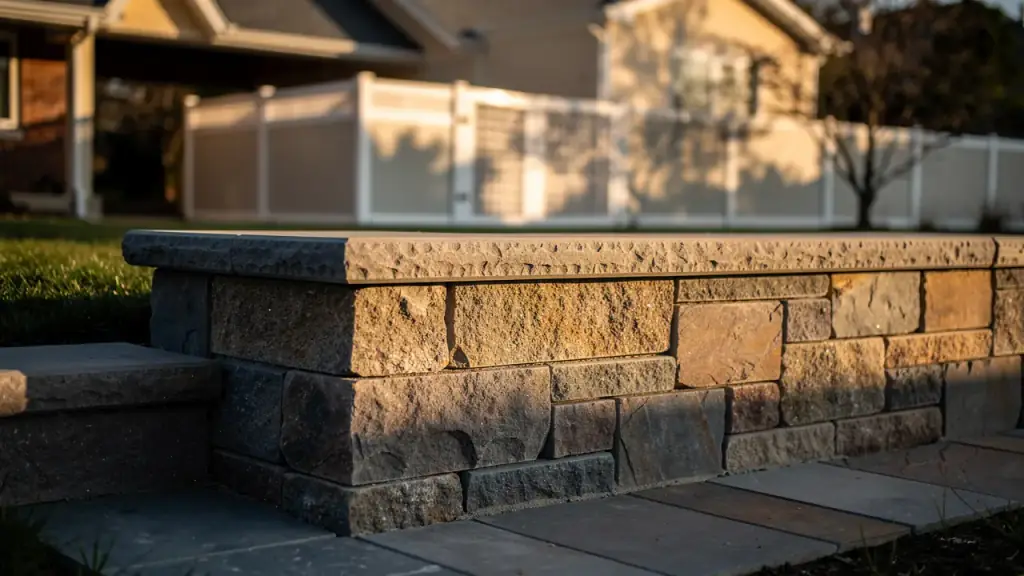
Same stone family, different job
From the street, a permeable paver driveway and a standard paver driveway can look nearly alike. The difference is how they treat water. A standard, non-permeable paver system sheds rain off the surface, so the whole design depends on slope and on sending that water somewhere sensible. A permeable system is built to let rain pass down through the joints into an open stone layer below, where it's held and released into the ground.
TJM Yard Enhancing builds both. Their hardscape work includes driveways with permeable or non-permeable pavers, along with patios, walkways, retaining walls and the pavers around a pool. So the question for most homeowners isn't which one a contractor offers. It's which one fits your yard.
Both are made from the same family of interlocking concrete pavers, and both can be laid in a range of patterns, so choosing permeable doesn't mean giving up how the surface looks. The decision is about water, not style.
How non-permeable pavers handle rain
With a standard paver patio, the joints are packed tight with fine jointing material. Rain runs across the surface and off the edges, so the patio is built with a slight pitch away from the house. The base underneath is compacted crushed stone, and it's there for strength and stability more than for storing water.
This approach is well proven and works well for most patios and walkways. The thing to plan is where the runoff ends up. If it flows toward your foundation, a neighbor's yard or a low spot in the lawn, you'll have a problem that no paver choice fixes. A good layout works that out before the first shovel goes in.
How permeable pavers handle rain
Permeable pavers are laid with wider joints, and those joints are filled with small clean stone instead of fine material. Under them sits an open-graded base, meaning stone sized so that there are real gaps between the pieces. Rain drops through the joints, collects in those gaps, and soaks into the soil underneath at its own pace.
That makes them a natural fit for driveways and larger paved areas where runoff is the worry. Less water leaves the property over the surface, and puddles are less likely to form. It also means the soil below has to be able to take the water, so the ground conditions matter in a way they don't for a standard patio. On slow-draining soil, the base may need a plan for where the extra water goes.
In a Pennsylvania winter, that open base can help, because water drains down instead of sitting on top to freeze into a sheet of ice. It isn't a guarantee, and you'll still shovel and treat the surface like any other, but a permeable surface tends to hold less standing water.
What each one asks of you
- Non-permeable: the surface slope and the exit path for runoff have to be right. Maintenance is mostly sweeping and occasionally topping up jointing material.
- Permeable: the joint stone needs to stay open. Leaves, dirt and fine silt packed into the joints can slow drainage over time, so an occasional cleaning is part of owning one.
Neither is a fit-and-forget surface, but the upkeep for both is light compared to what a failing base costs you.
Patios, driveways and pool surrounds
For a backyard patio, standard pavers are usually the straightforward choice, with a proper pitch and a base that drains. For a driveway, especially one that sheds a lot of water toward the street or a neighbor, permeable pavers are worth a serious look. Driveways carry heavy loads, so the base design matters even more there, and it's one more reason to ask a contractor exactly what goes under the stone. Tires also push sideways when they turn, which leans on the edges, so a firm edge restraint and a well-compacted base aren't optional on a driveway.
Pool surrounds are a different case again. You're dealing with splash-out, wet feet and a deck that gets a lot of use, so you want a surface that dries well and drains in a predictable direction. Whether that points to permeable or standard pavers depends on your soil, your grade and where the water would otherwise run. A contractor should look at the actual yard before answering.
What to ask before you decide
Ask where the water goes in a heavy rain, what the base is made of, and what maintenance you should plan on. Ask what happens if the soil drains slowly. Those answers tell you more than a sample paver will.
TJM Yard Enhancing is a Certified ICPI Installer and works with Techo-Bloc Pro products. If you'd like someone to walk your yard in Quakertown or Coopersburg and talk through the options, call (610) 346-6867 for a FREE estimate.
TJM Yard Enhancing, (610) 346-6867
Call (610) 346-6867More articles
What Goes Under a Paver Patio, and Why It Matters More Than the Pavers
Two patios can look identical on day one and behave completely differently by the third winter, and the difference is underground.
Why Retaining Walls Lean and Bulge, and What a Certified SRW Installer Does Differently
A wall that holds back soil is fighting water and weight every day, and the part you can't see decides whether it wins.